My clients pay me thousands of dollars per hour to take them through a proven system of success. In this new in-depth video from my team and I, I’ll teach you how to use this exact system … for free!
This system helps you step back and act as the Chief Strategist of your life and career.
When clients sit down with me, they don’t pay me to give them quick tips. They pay for a comprehensive strategy. They pay to stop repeating loops of low-value time and start engineering real measurable outcomes.
Let’s dive into this $1000 per hour habit:
The Result Hour.
Watch now ⤵️
Five Minutes: Define Your Result
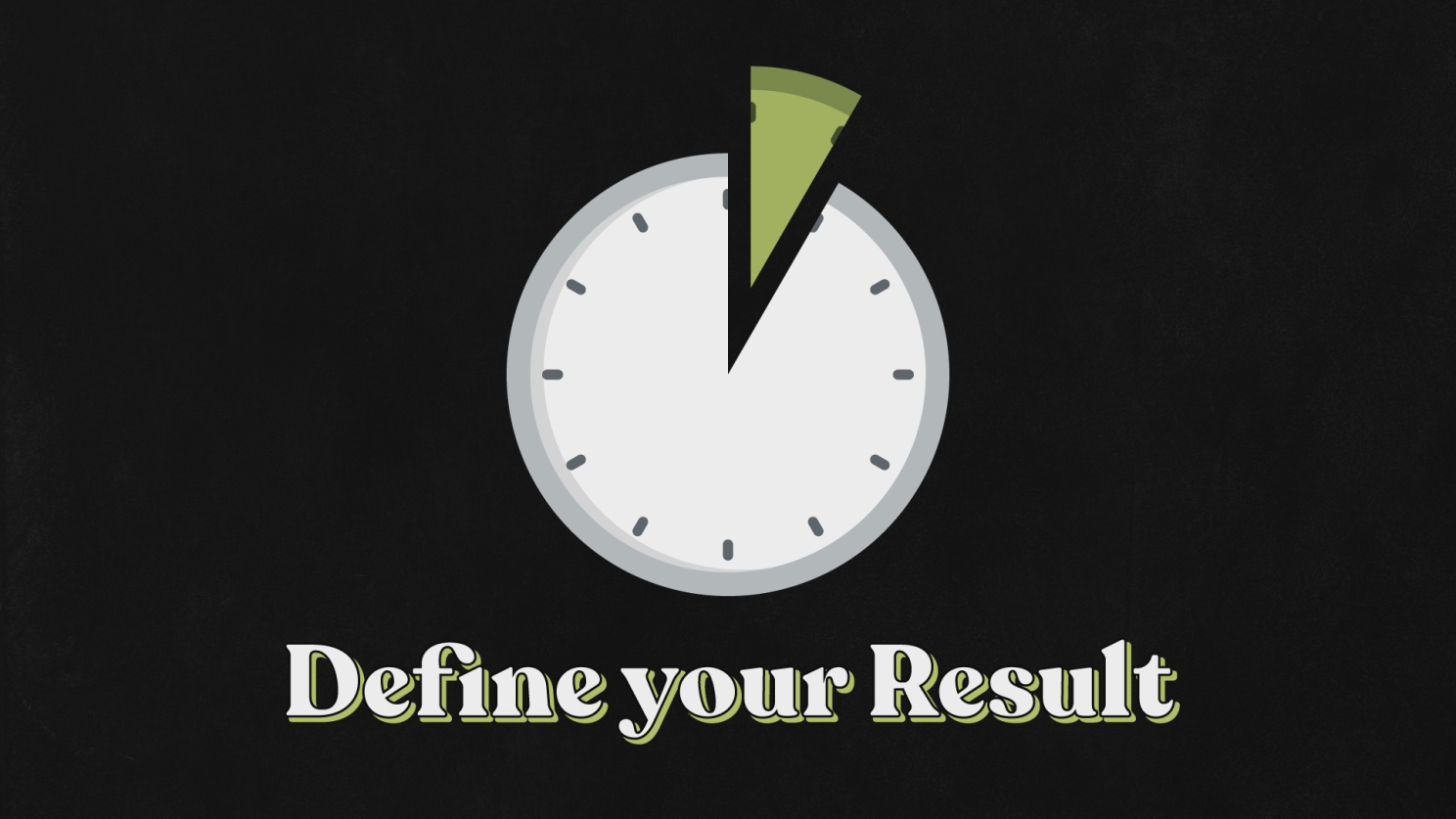
The first five minutes of your Result Hour start with one simple question: “What high-value Result do I want that I’m not getting right now?”
Notice how I’m using the word Result, not goal. Goals are typically fuzzy, abstract, and distant. Results, on the other hand, are focused and specific.
Consider choosing career, personal, or organizational results. For example:
- Career Results: Improvements in your career. Think raises, promotions, employee recognition.
- Personal Results: Investments in yourself that improve the value of your time, health, and energy.
- Organizational Results: Important changes in your strategy. These might include closing major sales, starting a new business venture, or building strategic partnerships.
If you can’t think of results worth thousands yet, that’s okay, even expected! Just choose something meaningful to YOU. The more practice you get with hundred dollar results, the more you’ll develop the skills needed for a $1000 one.
Let me know in the comments what Result you chose!
“What high-value Result do I want that I’m not getting right now?”
Five Minutes: Refine Your Result
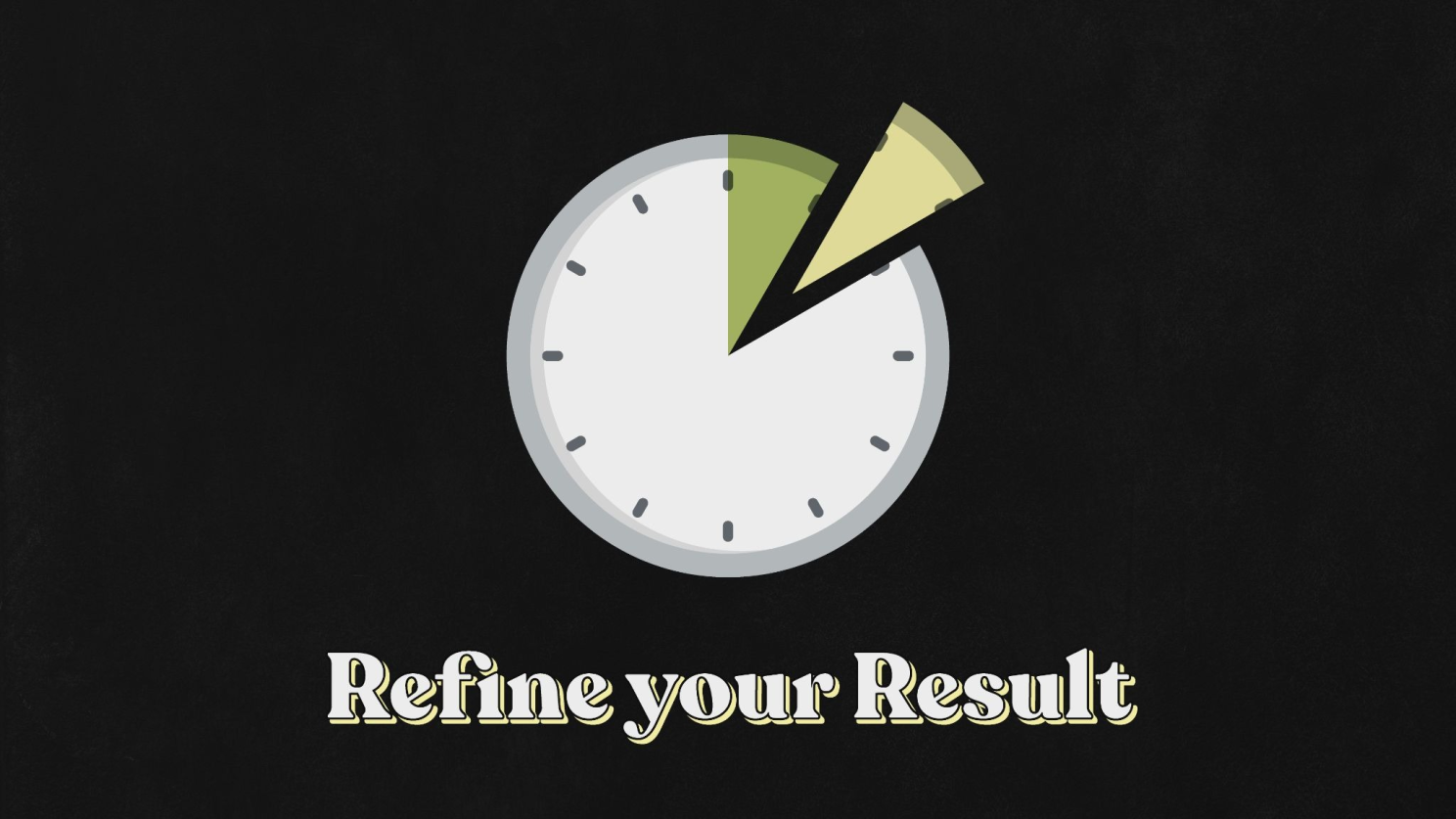
Next, spend about five minutes refining your result to make it:
- Focused
- Measurable
- Time-Based
A Focused Result means picking one outcome at a time, rather than trying to fix multiple problems at once. Instead of fixing both your sleep AND your exercise, choose one now and work on the other in a future Result Hour.
A Measurable Result has a numerical measuring stick attached to it. Think, sales numbers, or hours spent on a project. Even ideas that are a little abstract, like being a better listener, can be measured by rating yourself on a scale from 1 to 10.
A Time-Based Result gives you a clear and reasonable deadline. For example, raising income by 50% in one month is probably unreasonable, but doing it in one year may be attainable.
The Result Formula
The next thirty minutes of the Result Hour revolve around the Result Formula.
Results rarely happen because of sheer willpower or iron discipline. Instead, they emerge when three elements work together.
S + A + M = Result
That’s Systems plus Accountability, plus Motivation equals your Result.
Think of the Result Formula like a diagnostic tool. I can usually tell what SAM element a client is missing by what they’re NOT getting right now.
If they’re robotically dragging themselves to do only the bare minimum, they likely have Systems and Accountability, but lack Motivation. If they started strong but faded over time, they likely have Systems and Motivation, but lack Accountability. And if they’re inconsistent and changing directions, they probably lack a clear System.
Ten Minutes: Systems (Who / How / With What)
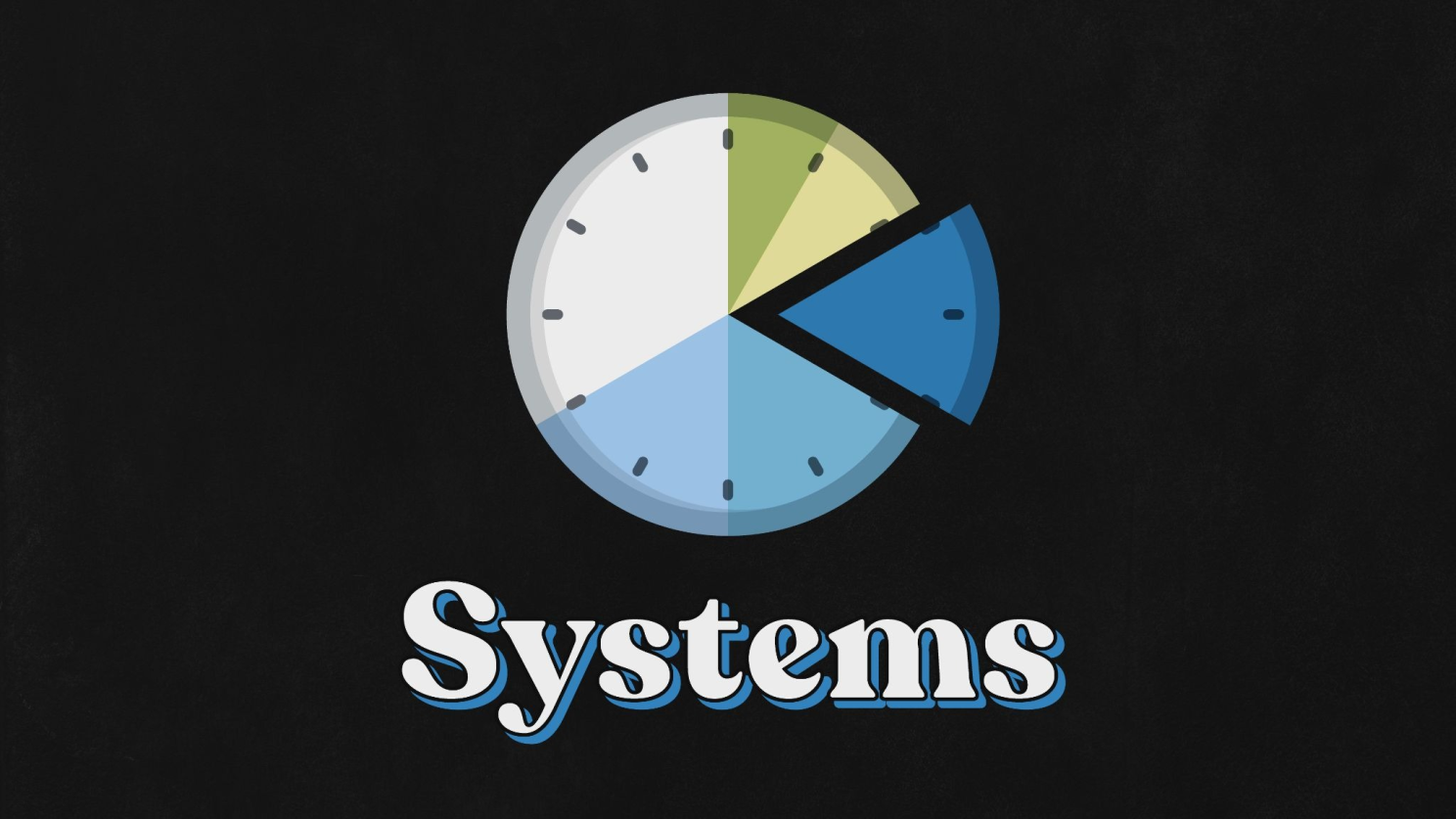
In their simplest form, Systems are the step-by-step processes you need for getting an intended Result. For example, recipes in a cookbook, assembly instructions for furniture, or morning routines are all Systems. Often, you’re not getting what you want because you’re using the wrong System. Or … no System at all.
When I examine Systems with clients during our Result Hour, we break it down into three specific sub-elements:
- Who
- How
- With What
Who is the person executing the System. For personal results, that’s you! Do you possess the traits and skills necessary to achieve this outcome? Traits are inherent physical and psychological characteristics– gifts that can’t be magically bestowed upon a person. Skills are acquired knowledge, like typing or managing budgets.
Building a powerful System requires assessing traits versus skills. Adapt your System to who you are and embrace your tendencies, rather than trying to fight them. An imperfect System that you’ll actually follow is infinitely better than a perfect one you’ll abandon.
Ask yourself: “Do I have the traits necessary for this Result? And if not, can I adapt my Result or acquire skills that will still allow me to obtain it?”
Next, think of How as a documented instruction manual. If you’ve never achieved the Result you’re working towards, don’t reinvent the wheel. Look for someone who’s already accomplished what you want and borrow THEIR blueprint.
Remember, there’s no such thing as a perfect System: there’s only the next draft. Books, videos, and how-to articles are good places to find your first draft System. Ask yourself: “Do I have a proven, documented System that I’m following?”
Once you’ve found your System, document it. Documentation, whether written or digital, in audio or video, is critical because human memory is fallible. An undocumented system … is no system at all.
Ask: “Do I have a documented How? Do I have a System that I’m following to get this Result?”
The third sub-element is With What.
What tools do you need to complete the job? Look at your workspace and technology. Is your computer lagging? Is your chair hurting your back? Outdated tools impose a continuous tax on your energy and focus.
If an upgrade pays for itself in time or energy within one month, and the benefit lasts for at least a year, then make that investment immediately.
With What also applies to your body and environment. Are you properly fueled? Is your workplace set up for success? For example, moving to a workplace with less distraction may help you make more progress faster.
Ask yourself: “Do I have the tools needed for this Result and are they up to date?”
After you’ve gone through the three sub-elements of Who, How, and With What, pause for a moment and look at the big Systems picture. Ask yourself: “What am I missing?” Then make a list of any potential System improvements you might need to implement.
“Often, you’re not getting what you want because you’re using the wrong System. Or … no System at all.”
Ten Minutes: Accountability
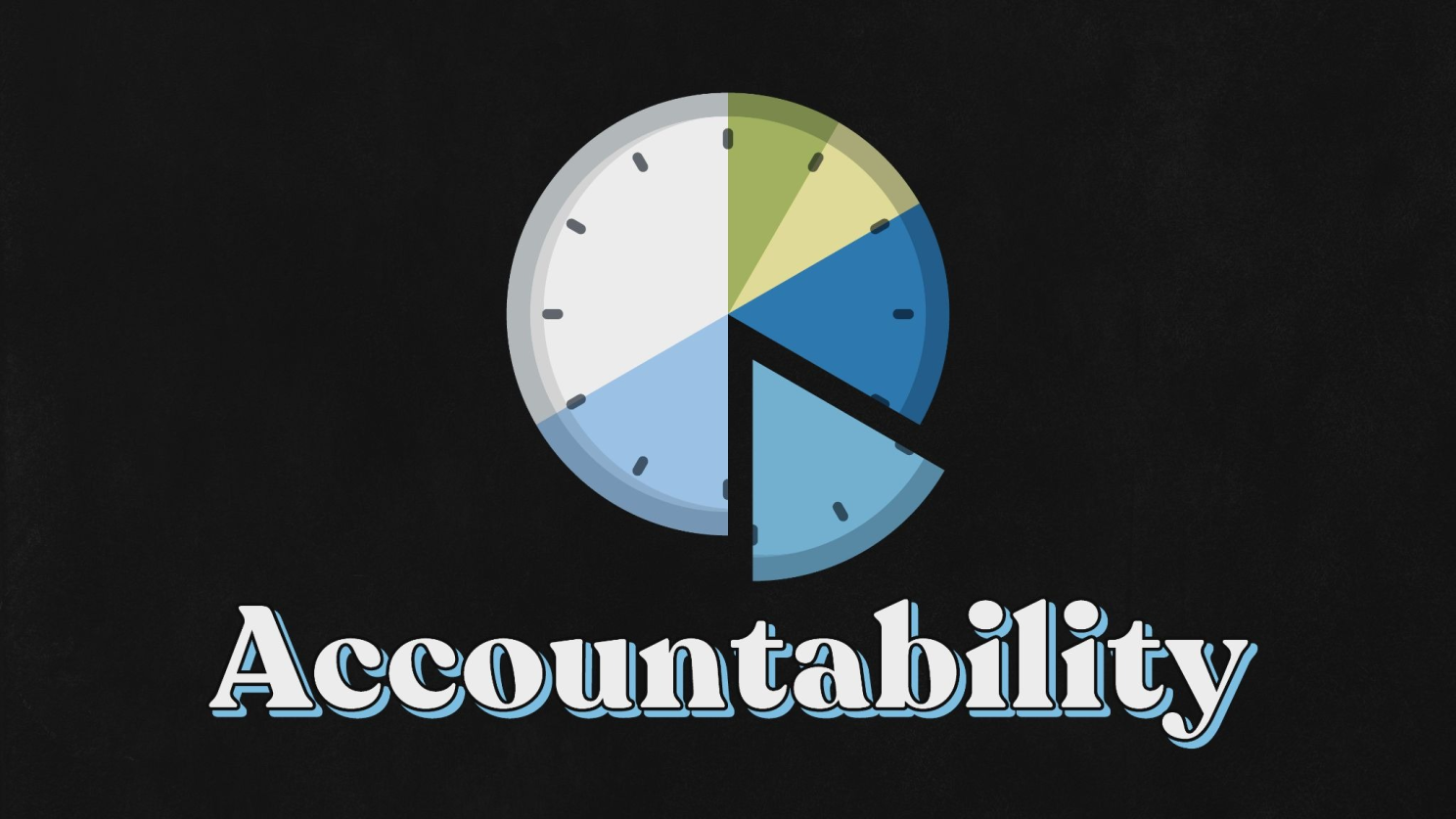
The next ten minutes of the Result Hour, Accountability, is widely misunderstood.
People often say they’ll “hold themselves accountable,” but that’s actually saying that they’re being responsible.
But what happens when you’re tired, stressed, or lack discipline? We all experience that, which is why true third-party Accountability becomes vital.
When evaluating Accountability, review Trust, Training, and Follow-up.
Trust means having complete confidence in your partner’s ability to guide you. When individuals truly trust their coaches, mentors, or leaders, they’re significantly more willing to become open to feedback, admit performance mistakes, and make more discretionary effort.
Ask yourself: “Do I have an accountability partner I truly trust? Or do I need to adjust or find a new coach?”
Consider the Training your Accountability partner provides. Working with an Accountability partner isn’t just about having occasional conversations. It requires structured practice built around one key principle: repetition.
To build continuous training into your Accountability, ask your Accountability partner to demonstrate the best way to perform a skill. Ask for instruction and practice those skills with them. Receive feedback for improvement, and then repeat the process until the required skills become second nature and the required knowledge transfers from them to you.
Ask yourself: “Am I getting structured training with my Accountability partner? Am I getting the practice reps I need?”
Third under Accountability is Follow-up. Performance improvement and measurement go hand in hand. If you want to get better at anything, you need to report your progress to your partner on a frequent basis. I recommend once per week.
Reporting doesn’t need to be complex. Limit your weekly reports to a few key numbers at most and give your partner explicit permission to ask tough questions when you drift off track.
Ask yourself during your Result Hour: “Am I consistently reporting my progress to my Accountability partner? Are they correcting me when I get off-course?”
Ten Minutes: Motivation
The final section of the Result Formula starts by asking: “Why am I trying to get this Result? Is it truly meaningful to me?”
Your Motivation can tie into your result in three ways:
- Values
- Vision
- Cause
First, consider your personal Values. Imagine we’re sitting at a cafe and I ask, “What’s one word that means everything to you?” Maybe you say, “Family.” I’d ask, “What does family mean to you?” And perhaps you say, “Caring for those closest to me.” I’d go deeper and ask, “Why does that matter?”
I’d keep digging deeper until I ask: “How does achieving this Result help you obtain this personal value of Family?”
My intent is to help you see that getting your Result has a powerful connection to what you believe most.
If you haven’t written down your values yet, use a Result Hour session to write the core principles you believe in, along with a short one-sentence definition for each.
Second, consider your Vision. While your Result is a short-term milestone, your Vision is a five-year destination.
If you don’t have a vision yet, use a future Result Hour to answer these three questions:
- “Who do I want to be?”
- “What do I want to do?”
- “What do I want to have five years from now?”
Write your answers down, even if they’re imperfect.
Third, consider if you have a Cause.
Your Cause is part of your unique contribution to the world. Giving time or resources to a cause triggers an internal generosity effect that can push you towards greater success and accelerate achieving your Result.
Ask yourself: “Do I have a defined Cause? And how will achieving my Result help me contribute to it?”
“How does achieving this Result help you obtain this personal Value?”
Five Minutes: Review Missing Pieces
Odds are you’ve written down several actions you could take—maybe many. That’s completely fine!
What you’re looking for is ONE action step that you can take right now that will move you closer to your result.
Just move forward, do the best you can, and then create a reminder for yourself during your next Result Hour to check on your progress.
Five Minutes: Schedule Time to Act
The final five minutes are the most important part of the entire Result Hour.
Schedule time to ACT.
Open up your calendar after this video and schedule time to take that next action toward getting your Result.
Even small actions, which are scheduled in advance, eliminate analysis paralysis and create real momentum.
Wrap Up

If you’ve been doing the math, you might notice we’ve got about ten minutes left over in the Result Hour. That’s by design. It’s a little buffer so you don’t feel rushed in case you need to spend extra time on a section.
And that’s how the Result Hour works! Schedule a recurring appointment for yourself–at least every two weeks–for your Result Hour. It’s the habit that will get you Results that are worth thousands of dollars…and more.
I invite you to watch the full video attached at the beginning of this newsletter! You’ll discover in much greater detail how to master the Result Hour!
➡️ Do you work with someone who could benefit from this advice? Please forward this newsletter to them!
✅ If you enjoyed this newsletter and video, be sure to subscribe!
For weekly tips on productive leadership and time management in high-growth companies, follow me, Dave Crenshaw, on LinkedIn.


